Merchy
A Multi-Vertical Transactional SaaS Platform for Telegram WebApps
Data Nexus case study: architecting a multi-vertical transactional SaaS platform for Telegram WebApps with a unified, state-driven transaction core.

- Client
- Merchy
- Year
- 2023
- Duration
- 6 months
- Scope
- SaaS, E-commerce, CRM, WebApp, UX/UI
Invariant
Every vertical is a specialisation of one transaction sequence. A new business line changes the data and the rules, never the structure.
Merchy is a transactional SaaS platform built specifically for Telegram WebApps, enabling businesses to sell products, services, and bookings directly inside Telegram bots — without standalone websites or native applications.
The platform was conceived as a universal transaction engine, capable of supporting fundamentally different business models (retail, food ordering, services, bookings) on top of a single architectural core.
Rather than being a collection of domain-specific interfaces, Merchy is a system-driven product where user flows, pricing logic, scheduling, fulfillment, and post-order interactions are expressed as variations of the same transaction model.
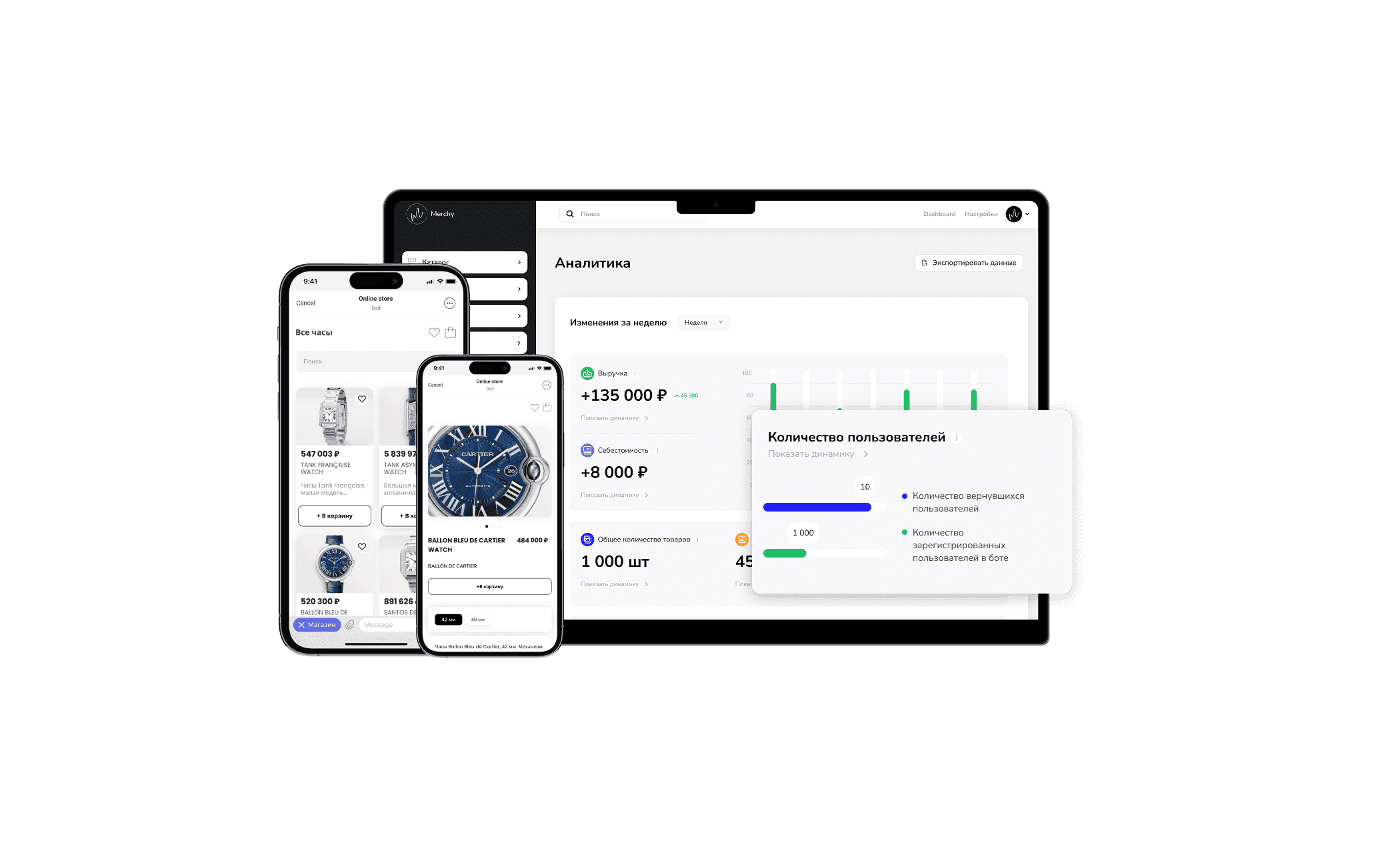
Telegram WebApps impose strong structural constraints:
mobile-first environment with limited navigation patterns
high sensitivity to cognitive overload
fragmented user attention
absence of conventional web UX affordances
At the same time, Merchy needed to support:
complex product configuration (variants, add-ons, discounts)
time-based services and bookings
fulfillment logic (delivery, pickup, scheduling)
analytics and operational control for merchants
scalability across multiple business verticals
The core challenge was not interface complexity, but systemic complexity.
Without a strong architectural foundation, each new business scenario risked:
creating new screens
duplicating logic
increasing development and UX debt
breaking product coherence

Data Nexus approached Merchy as a product architecture problem, not a UI project.
1. Canonical Transaction Model
Instead of designing domain-specific flows, Data Nexus defined a universal transaction sequence that acts as the invariant core of the platform:
Browse → Select → Configure → Schedule → Fulfillment → Payment → Post-Order
All supported verticals — retail, food, services, bookings — are specializations of this same transaction graph, differing only in domain rules and data, not in structural logic.
2. State-Driven UX Architecture
Merchy was designed around states, not screens.
Key principles:
variations are modeled as state changes, not navigation branches
configuration flows are nested states, not new pages
filters and options are overlays, not separate interfaces
post-order interactions are continuations of the transaction
This approach:
reduced UX and development duplication
prevented interface explosion
preserved cognitive clarity for end users
3. Multi-Vertical Scalability on a Single Core
Using the same transaction engine, Merchy supports:
Retail & E-commerce
catalogs, filtering, variants, discounts
Food Ordering
menus, ingredients, add-ons, cart, delivery tracking
Services & Bookings
scheduling, time slots, duration, capacity management
All verticals reuse:
the same interaction patterns
the same state logic
the same transaction semantics
Only domain-specific constraints and content change.
4. Enterprise-Grade Operational Layer
In parallel with the Telegram WebApp, Data Nexus designed a full SaaS admin platform functioning as a merchant operating system.
Capabilities include:
product and service management
pricing and discount configuration
order and fulfillment control
subscription and tariff management
advanced analytics (revenue, cost, conversion, behavior)
This ensured that Merchy was not only usable, but operationally scalable.
5. Architecture Built for Growth
By abstracting logic into:
transaction states
reusable interaction modules
domain-agnostic components
Merchy can expand to new business models without redesigning its core system.
The platform scales through structure, not through interface multiplication.
Outcome
A unified transactional SaaS platform operating entirely inside Telegram
Support for multiple business verticals on a single architecture
Reduced UX and technical debt through state-driven design
Enterprise-ready admin and analytics infrastructure
Strong foundation for white-label, API, and enterprise deployment
This case demonstrates Data Nexus’s ability to design systems that remain coherent under complexity, and to transform fragmented requirements into scalable SaaS architectures.
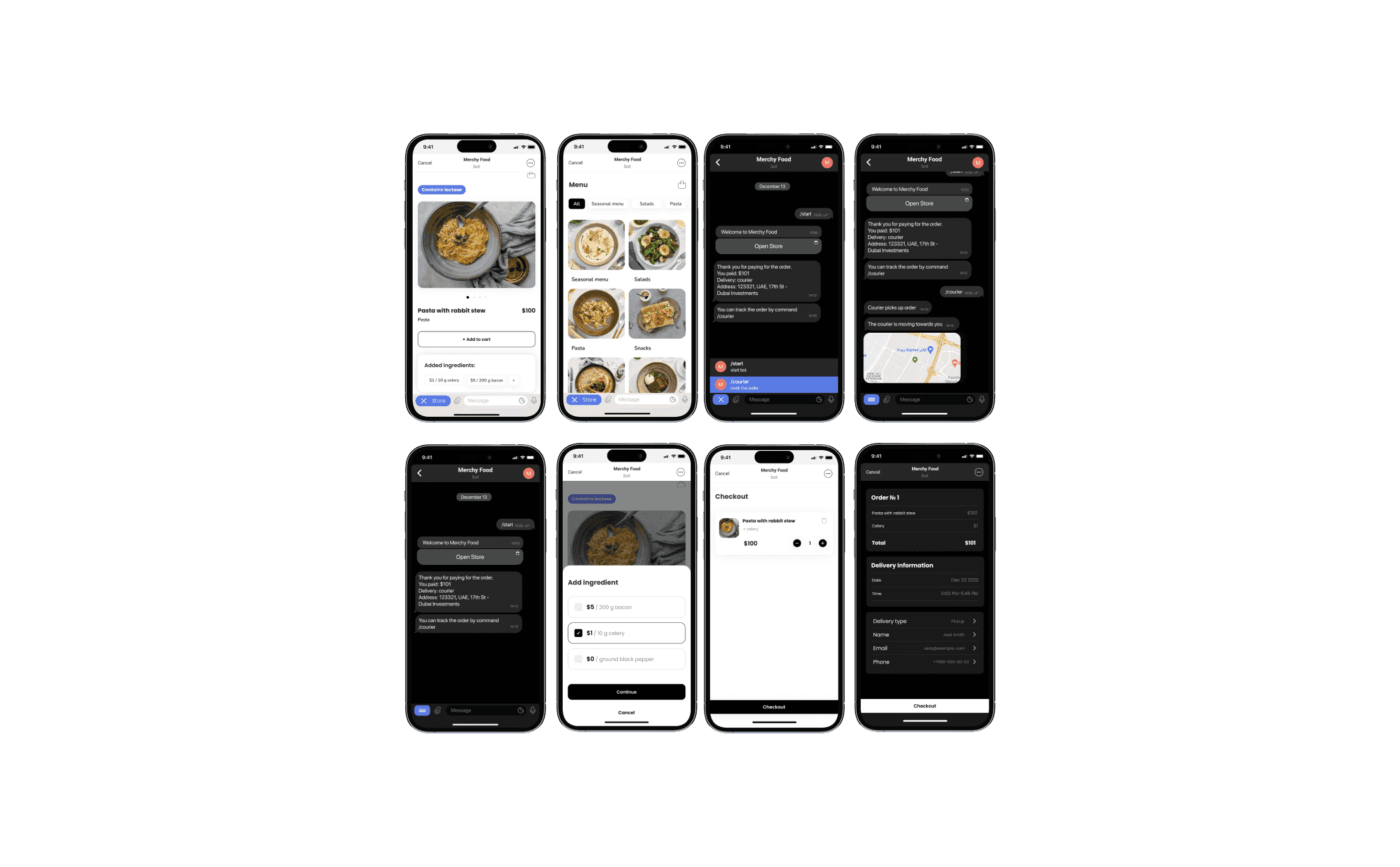
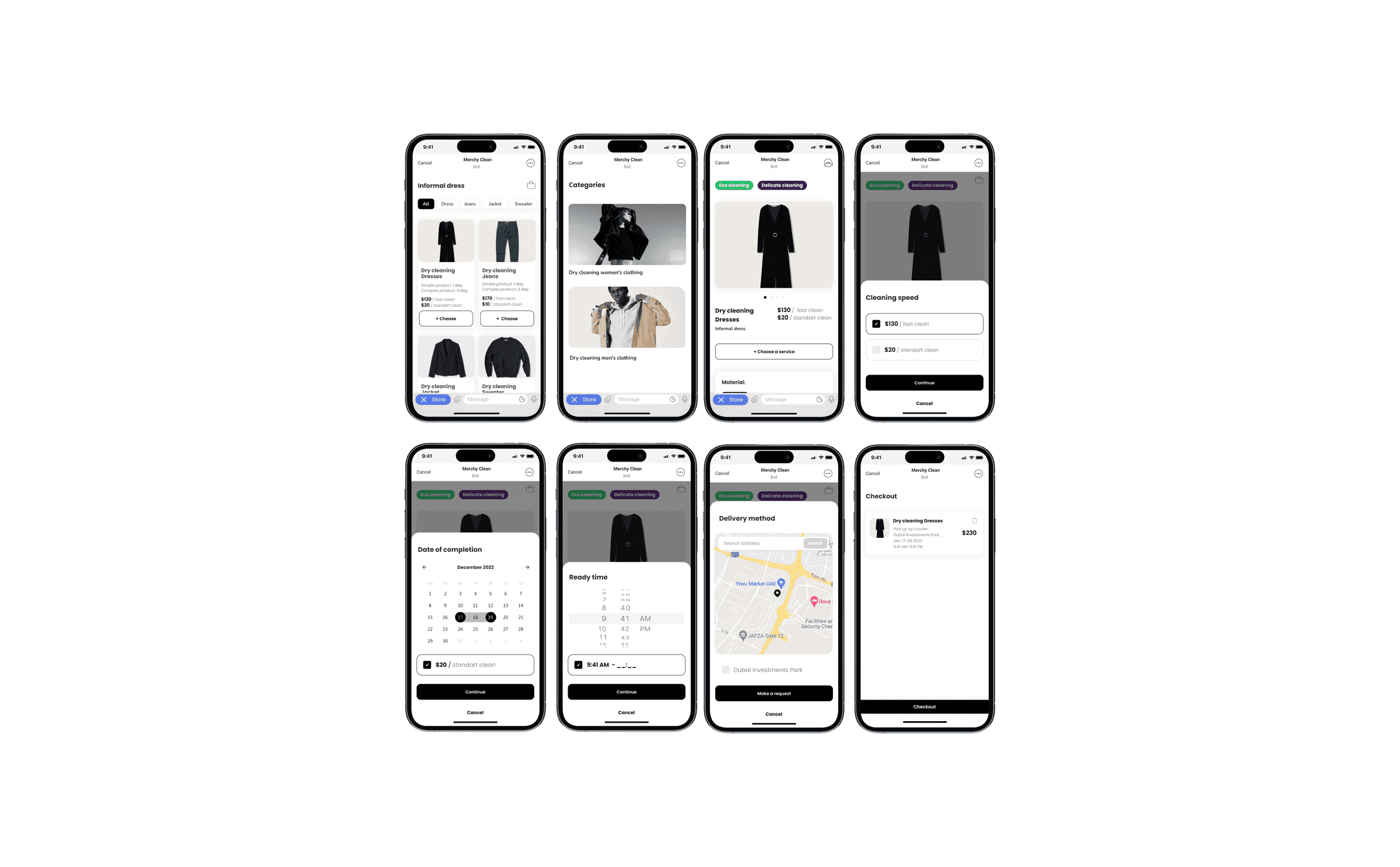
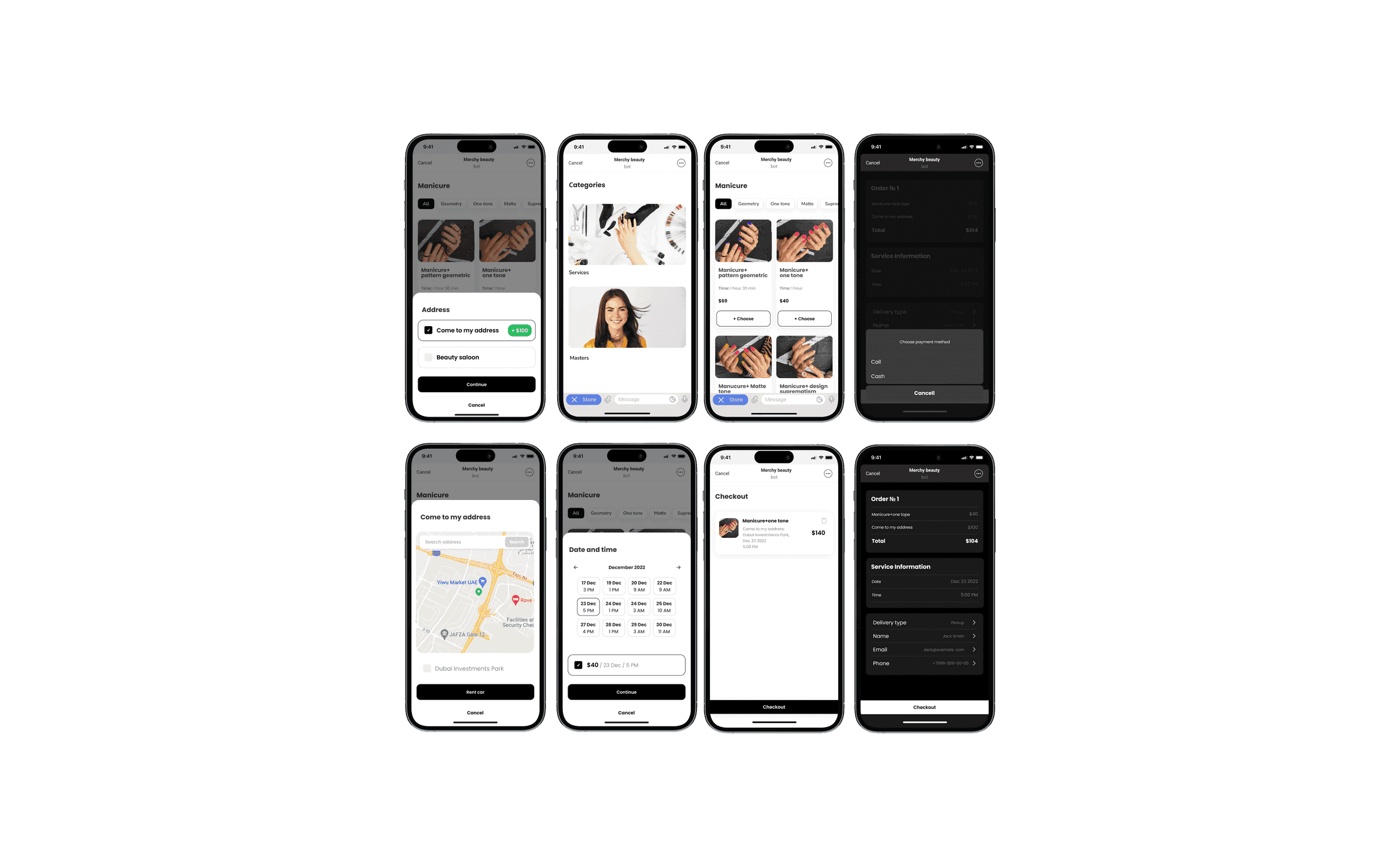
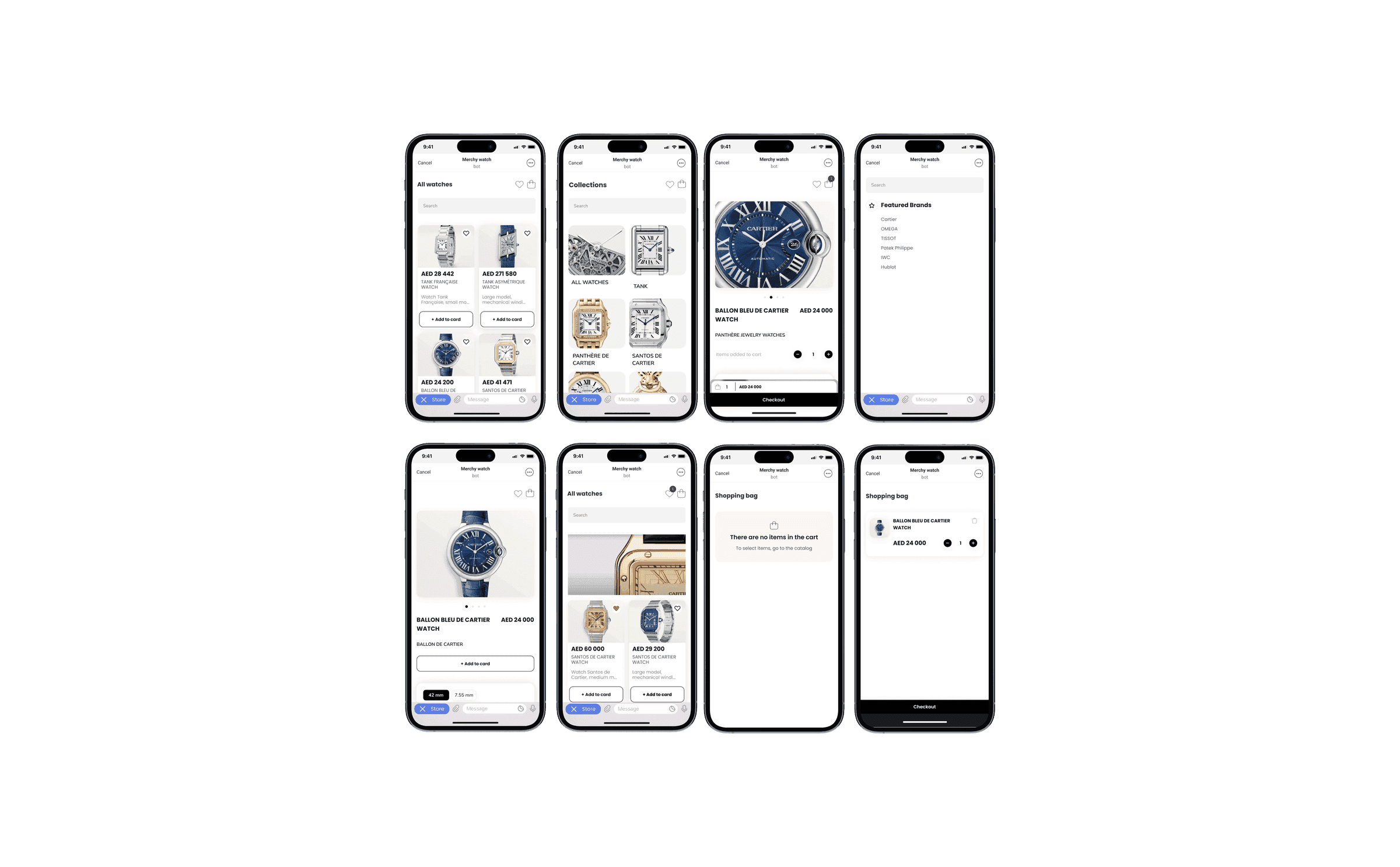
Merchy was delivered as a coherent, scalable transactional SaaS platform, capable of supporting multiple business models inside Telegram WebApps without fragmenting UX or system logic.
Architectural Results
A single, canonical transaction core reused across retail, food ordering, services, and bookings
State-driven UX architecture, reducing dependency on screen-level branching
Clear separation between domain logic and interaction logic, enabling controlled product growth
Platform extensibility without redesigning core flows or interfaces
Product & Operational Impact
Reduced UX and system complexity by consolidating multiple verticals into a unified transaction model
Faster time-to-market for new business scenarios and verticals
Lower long-term design and development overhead due to reusable states and interaction patterns
Enterprise-ready admin system enabling merchants to operate, analyze, and scale their businesses from a single control layer
Strategic Outcome
Merchy evolved from an initial e-commerce concept into a multi-vertical transactional platform, positioned for:
white-label deployment
enterprise clients
API-driven integrations
further expansion beyond Telegram
The result is not a collection of interfaces, but a transactional system that remains structurally stable under growth and complexity.
- –40%
- UX & flow complexity via state-driven architecture
- –60%
- Time-to-launch for new business verticals
- 4+
- Business verticals on a single transaction core
The first two are engineering estimates against the implementation that preceded the rebuild, not instrumented measurements, and they are stated here as estimates. The count of verticals on one transaction core is a count, and it is the one figure in this record a reader can check.
A method page can argue anything. This is the measurement it argues from, which is why the two are linked in both directions rather than one.
- Platform and transactional architecture
- The domain model is the product. Everything above it is an interface to it.
- Custom software development and AI engineering for Dubai
- A probabilistic component is only safe inside a deterministic boundary.
- UX, UI and user flows
- Model states, don’t multiply screens.
- From idea to a product that exists
- Find the assumption that kills it, and test that one first.
Each names what it is good for and the point at which it stops working. This record is the evidence those pages cite, which is why the link runs in both directions.
- Telegram Bot API
- Telegram's programmatic interface: bots that hold a conversation, and web apps that render a full interface inside the chat.
What made this record possible was a diagnosis before a proposal. That is the same first step whatever the system is, and it is the one thing worth asking for now.