BHM Store
Enterprise E-commerce Recovery & Data-Driven Rebuild
How Data Nexus rebuilt and scaled BHM Store after total data loss, restoring pricing, analytics, and increasing conversion from 2.3% to 17%.

- Client
- BHM Store
- Year
- 2024
- Duration
- 2 months
- Scope
- CRM, Marketing, Agency, UX/UI, E-commerce
Invariant
Margin is derived from procurement reality, not from competitor prices. Market data sets the position; the invoices set the floor.
BHM Store is one of the oldest and most established electronics retailers in the UAE, specializing in professional photo, video, and audio equipment, with a catalog exceeding 8,500 SKUs.
In 2023, the company faced a critical operational failure that completely wiped out its digital presence: the website, product database, pricing data, and all backups were destroyed as a result of a cyberattack.
Data Nexus was engaged not to “redesign a website”, but to rebuild the entire digital commerce system from zero, restore market-accurate pricing, re-establish operational analytics, and turn a catastrophic data loss into a scalable, modern e-commerce platform.
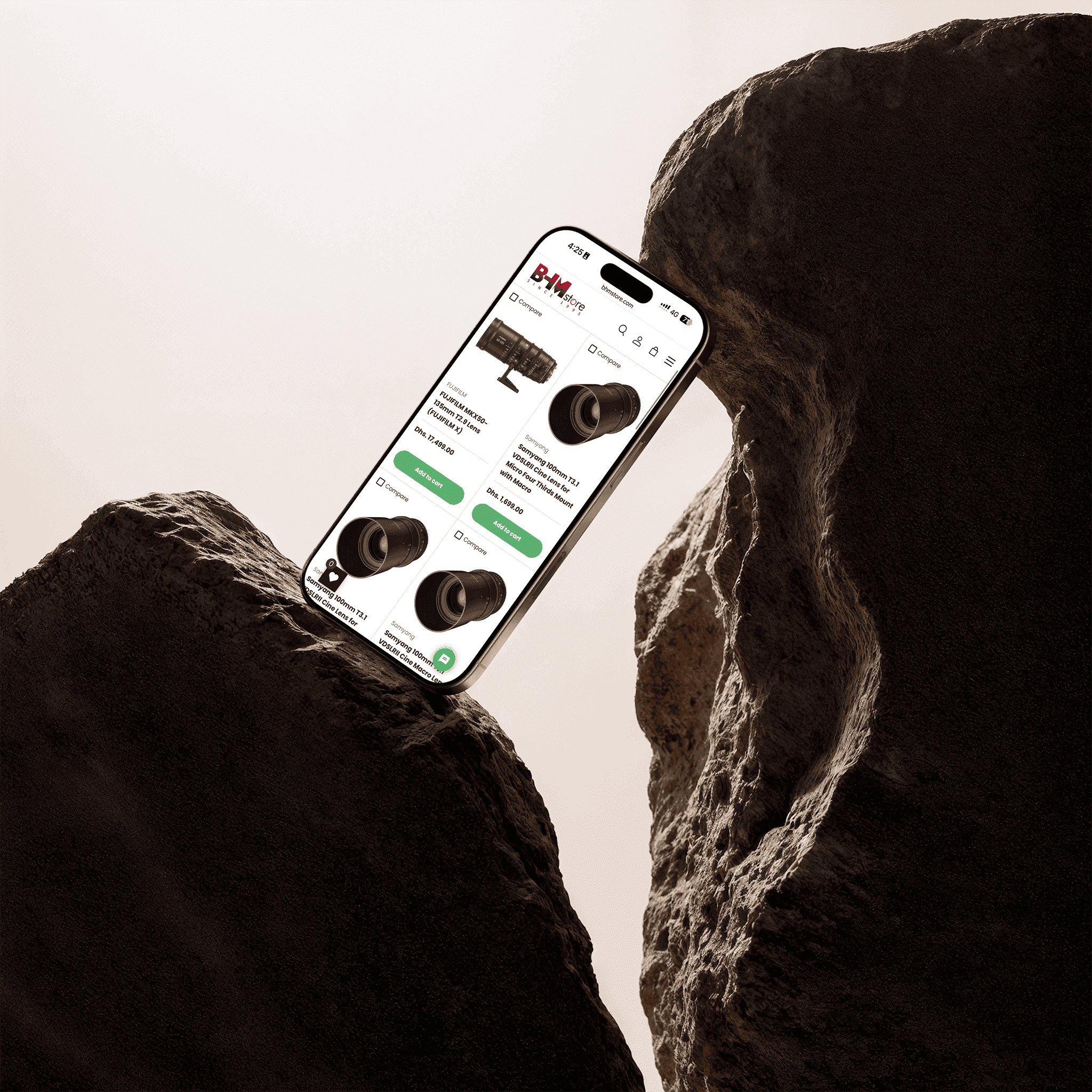
The client’s previous platform was built on a fragmented microservice architecture by third-party contractors. While technically complex, it lacked resilience, observability, and proper backup strategy.
As a result of the attack:
the entire website was deleted
all product data was lost
all prices and historical configurations disappeared
no usable backups were available
no complete source of truth remained
With 8,500+ products, manual recovery was not a viable option.
At the same time, the business could not afford:
long downtime
incorrect pricing
market misalignment
loss of trust from loyal customers
This was not a UX problem — it was a data, architecture, and recovery problem.
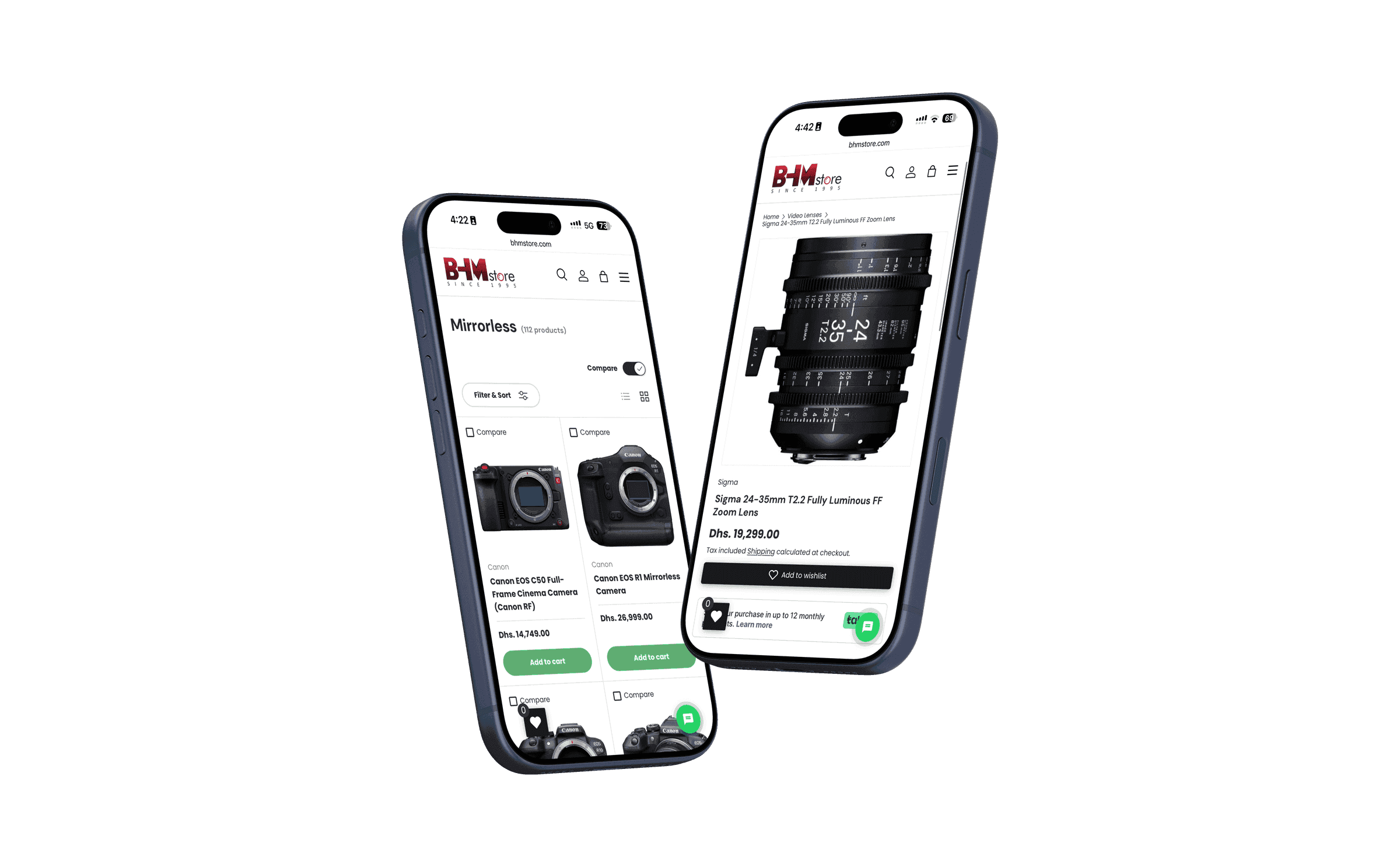
Data Nexus approached BHM Store as a full-stack recovery and system reconstruction project, combining infrastructure, data engineering, pricing analytics, and UX architecture.
1. Secure Infrastructure & Platform Rebuild
We first designed and deployed a new, hardened e-commerce infrastructure:
rebuilt the website from scratch
implemented modern security and access controls
removed legacy architectural complexity
established reliable data persistence and recovery logic
The new platform was designed for stability, observability, and long-term scalability, not just visual refresh.
2. Automated Product & Data Recovery at Scale
Manually recreating 8,500 SKUs was rejected immediately.
Instead, Data Nexus implemented a data-driven recovery pipeline:
identified authoritative US-based electronics retailers as reference sources
filtered catalogs strictly by brands sold by BHM Store
programmatically parsed:
product specifications
images
descriptions
category structures
This allowed us to reconstruct the full product catalog automatically, restoring thousands of products in days rather than months.
3. Market-Accurate Pricing Reconstruction
Pricing data had been fully destroyed.
To rebuild pricing correctly, we:
parsed US market prices for all matching products
calculated brand-level and category-level markups
normalized margins using market mathematics
adjusted pricing logic to UAE market conditions
Where partial procurement invoices and wholesale receipts were available, we:
validated reconstructed prices against real cost data
recalculated true product cost and margin structure
This resulted in market-aligned pricing with preserved profitability, not guesswork.
4. UX & Commerce Logic Redesign
With the system rebuilt, Data Nexus redesigned the entire user experience from first principles:
restructured categories and navigation
simplified product discovery
rebuilt checkout and cart logic
eliminated friction across the purchase funnel
The platform was redesigned to support high-intent professional buyers, not generic retail browsing.
5. Advanced Analytics & Dynamic Pricing Intelligence
We implemented a new internal analytics layer enabling:
real-time revenue and margin visibility
abandoned cart analysis
conversion tracking across flows
dynamic pricing response to demand and competition
Additionally, we enabled:
personalized promotional logic for repeat customers
data-driven marketing campaigns based on behavior, not assumptions
6. Payment Flexibility & Conversion Optimization
For the UAE market, payment methods are not a secondary checkout feature — they are a core conversion lever.
High average order values in professional photo, video, and audio equipment create natural friction at the point of purchase, especially for repeat and B2B-oriented customers.
Data Nexus approached payments as a behavioral and financial architecture problem, not as a simple integration task.
To further improve conversion and accessibility, we integrated Buy Now, Pay Later (BNPL) solutions:
Tabby
Tamara
This expanded purchasing power without eroding margin discipline.
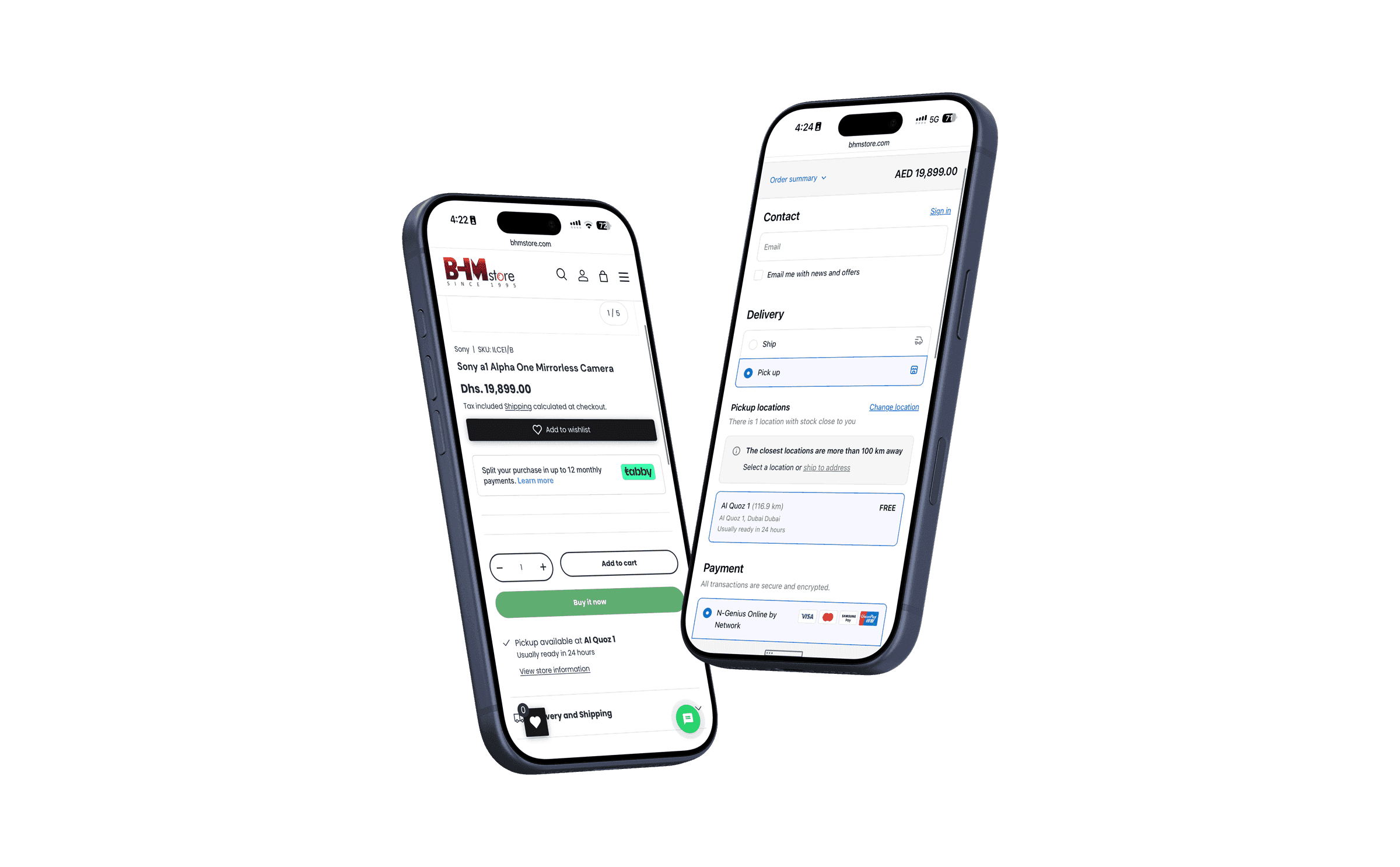

The engagement resulted in a full recovery and structural upgrade of BHM Store’s e-commerce system after a complete data and platform failure.
Within a compressed delivery window, Data Nexus rebuilt the digital infrastructure from scratch, restored the entire product catalog through automated data reconstruction, re-established market-accurate pricing, and redesigned the commerce experience around performance, trust, and conversion.
Beyond recovery, the project transformed BHM Store into a data-driven e-commerce operation:
pricing and margins are now calculated and monitored dynamically
customer behavior is observable across the full purchase funnel
marketing and promotions are driven by analytics rather than assumptions
the platform is secured, resilient, and ready for scale
What began as an emergency response evolved into a long-term competitive advantage, allowing the business to stabilize operations, regain customer trust, and outperform its historical benchmarks in conversion and revenue.
- 2.3% → 17%
- Conversion rate, before and after
- 40%
- Revenue growth in the second month after relaunch
- 8,500
- SKUs rebuilt after every backup was destroyed
Two of the three figures published here previously were withdrawn in August 2026, because this practice published a procedure for testing a supplier's growth numbers and its own did not pass it. A conversion multiple of 6.4× carried no base, and was ambiguous besides: measured against the same store's 2.3% starting rate, 17% is 7.4 times as much, while the increase is 6.4 times — the label read as one and the arithmetic gave the other. It is replaced by the pair, which needs no interpretation. An abandoned-cart figure of 65% reached us with neither a baseline nor a measurement window and has been removed rather than restated; the catalogue reconstruction that replaced it is checkable against the live store. The conversion pair and the revenue figure remain the operator's own analytics over the two months after relaunch in 2024, not our measurement, and Data Nexus has not independently verified them.
At one point, it genuinely felt like our business had collapsed. We lost critical data, systems stopped making sense, and there was no clear path forward. From the inside, it looked like months—if not years—of rebuilding, with a real risk of never fully recovering.
What actually happened turned out to be very different.
In less than two months, we received a completely rebuilt system that was not just a replacement of what we had lost, but a significant step forward. The new platform was clean, structured, and easy to scale. For the first time, our store felt like a modern, next-generation business rather than a patched-together e-commerce setup.
The team worked fast, stayed deeply involved, and clearly understood that this was not just a technical problem, but a business-critical situation. Decisions were made with growth in mind, not short-term fixes. As a result, we came out stronger than before, with better control, clearer analytics, and a foundation that can grow with us.
Looking back, what initially felt like a disaster became a turning point. We are genuinely glad this collaboration happened and grateful that our case was taken seriously and handled with such focus and speed.
A method page can argue anything. This is the measurement it argues from, which is why the two are linked in both directions rather than one.
- Anti-crisis engineering and recovery
- Stabilise before you improve. A system under stress cannot absorb a redesign.
- Intelligence and decision layers
- A metric with two definitions has none.
- UX, UI and user flows
- Model states, don’t multiply screens.
- CRM, websites and omnichannel
- One customer, one record. Every metric downstream depends on it.
- Digital marketing for Dubai and the UAE
- Spend follows contribution margin, not volume.
Each names what it is good for and the point at which it stops working. This record is the evidence those pages cite, which is why the link runs in both directions.
- Shopify
- Hosted commerce: Shopify runs the checkout, the payment compliance and the uptime; the theme and the data model are yours.
- PostgreSQL
- A relational database with real transactions: either every part of a change lands or none of it does.
- Cloudflare
- A global proxy network that terminates traffic close to the visitor, plus Workers — a runtime that executes code at those same locations rather than at an origin.
What made this record possible was a diagnosis before a proposal. That is the same first step whatever the system is, and it is the one thing worth asking for now.