

PalmWeave
Studio project · 2024
Automating a hand-tying technique that predates the machine performing it.
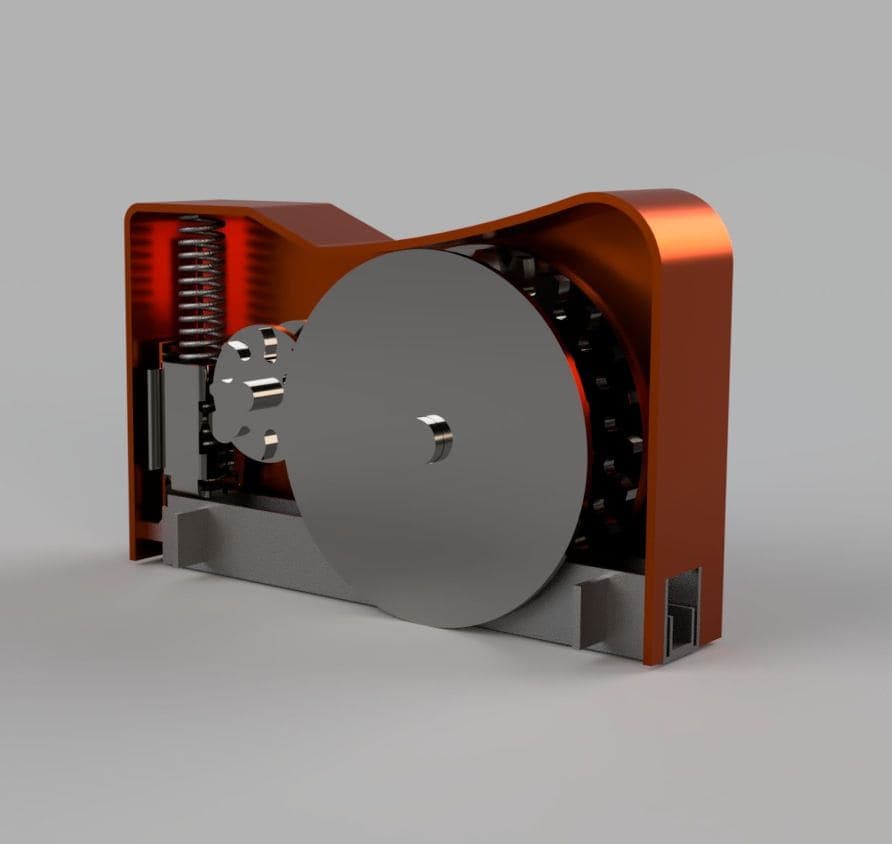
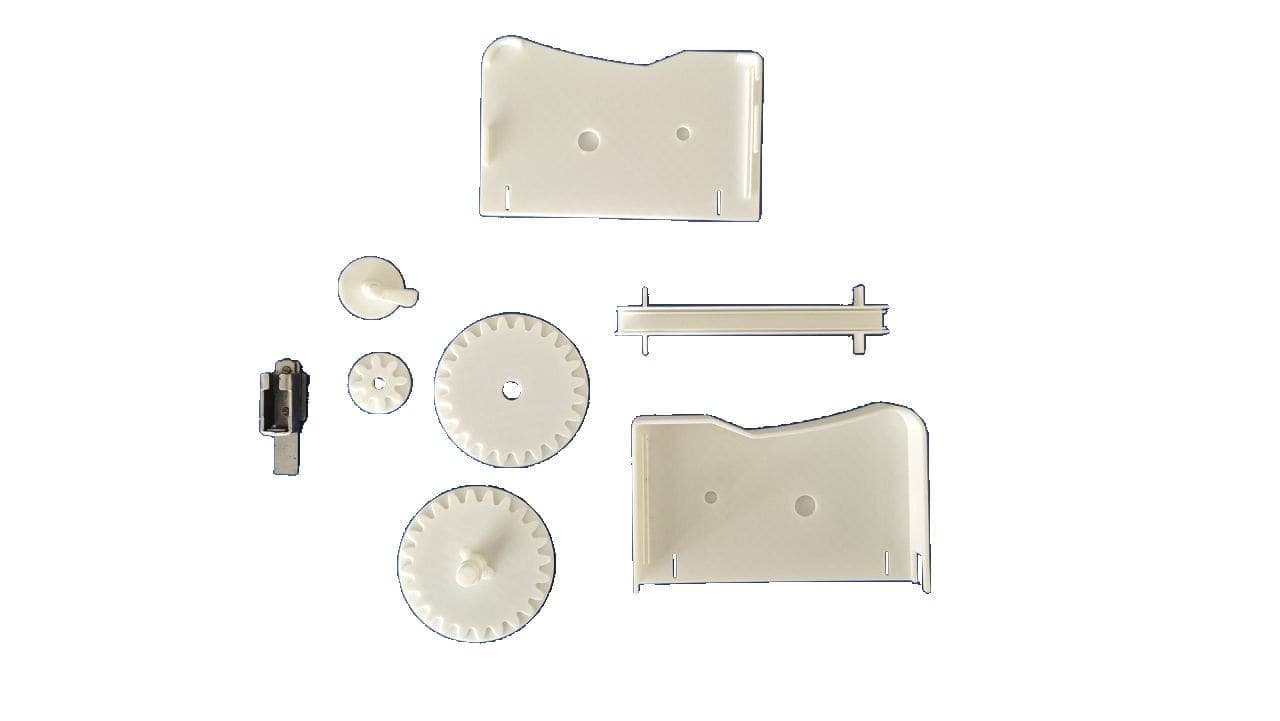
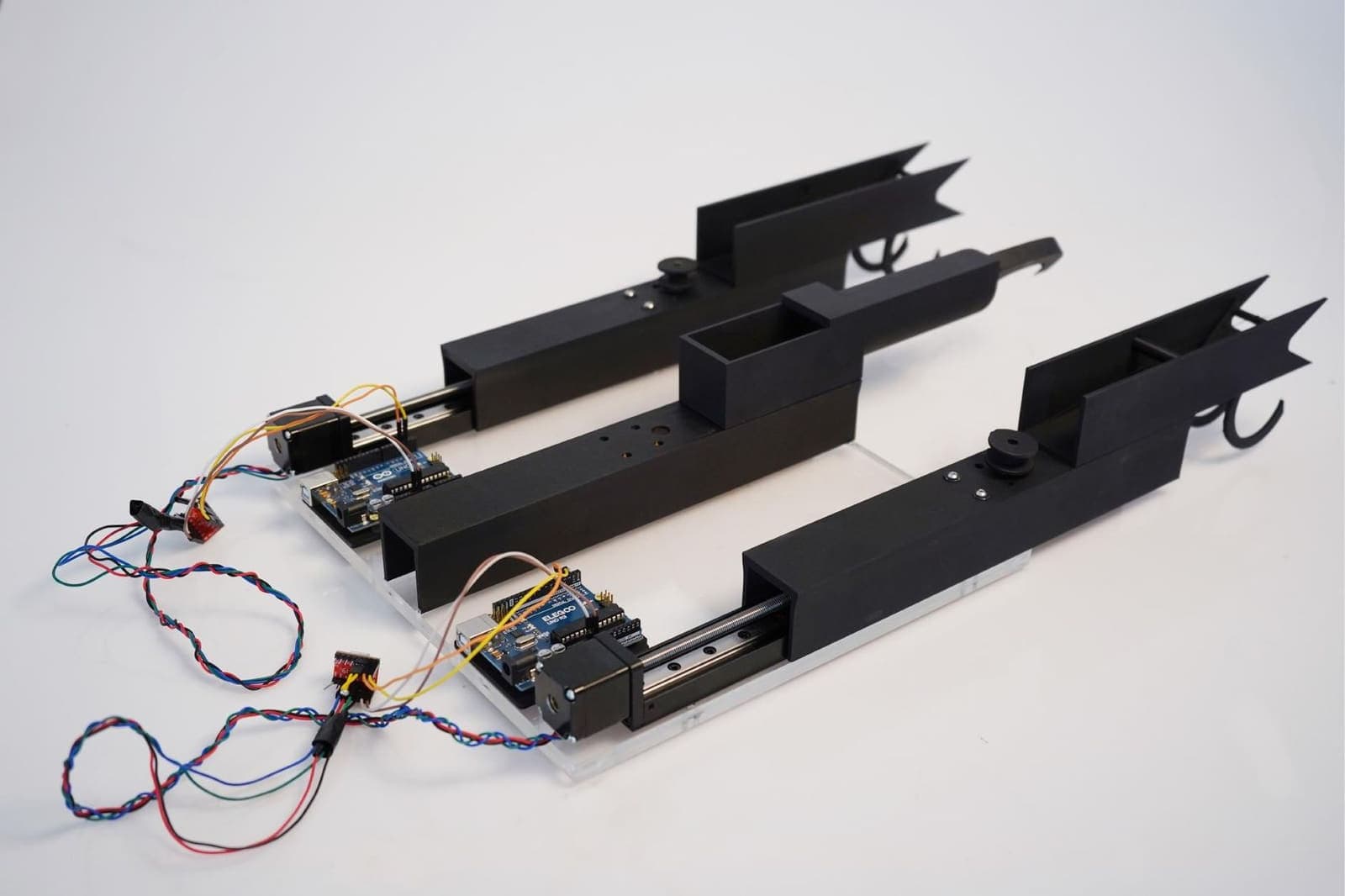
Date palm pruning is agricultural waste. Its midribs have been tied into fences, roofing and shelters across the region for centuries — always by hand. PalmWeave is an end effector for a 6-axis robotic arm that performs that tying at architectural scale.
The material shift drove the project. Palm leaves are culturally the obvious choice and structurally the wrong one — flexible, low density, prone to outdoor degradation. The midribs are rigid, dense, resistant to sun and humidity, and dimensionally variable, which is precisely what makes them difficult to automate.
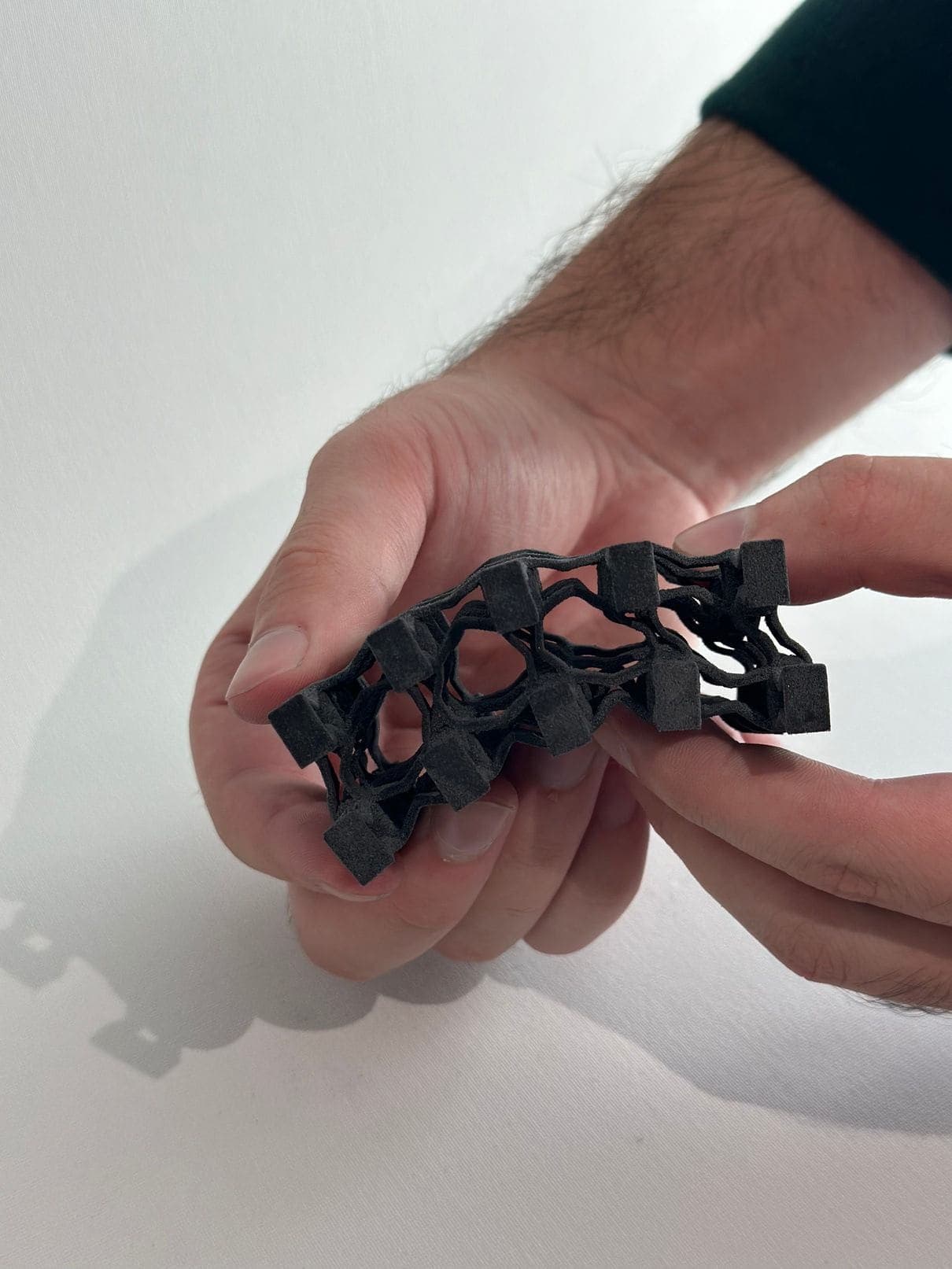
Midribs are held upright in a laser-cut base by TPU caps with an X-shaped cutout, gripping stems of varying thickness through the elasticity of the material rather than through tolerance.
- 01 Collect
- Pruning waste — the midribs left after the palm is trimmed.
- 02 Base
- TPU caps in a laser-cut base hold stems of varying thickness upright.
- 03 Grip
- Dual hook jaws close on the midrib.
- 04 Insert
- The midrib is held upright against the one already placed.
- 05 Bend and tie
- The tying unit threads the joint at the midpoints.
- 06 Repeat
- In levels, up the structure.
Role: mechanism design, CAD and visualisation, technical documentation. Robot positioning and control programming by team members. Team: S. Elkarmalawy · O. Khattab · K. Murtazaliev.